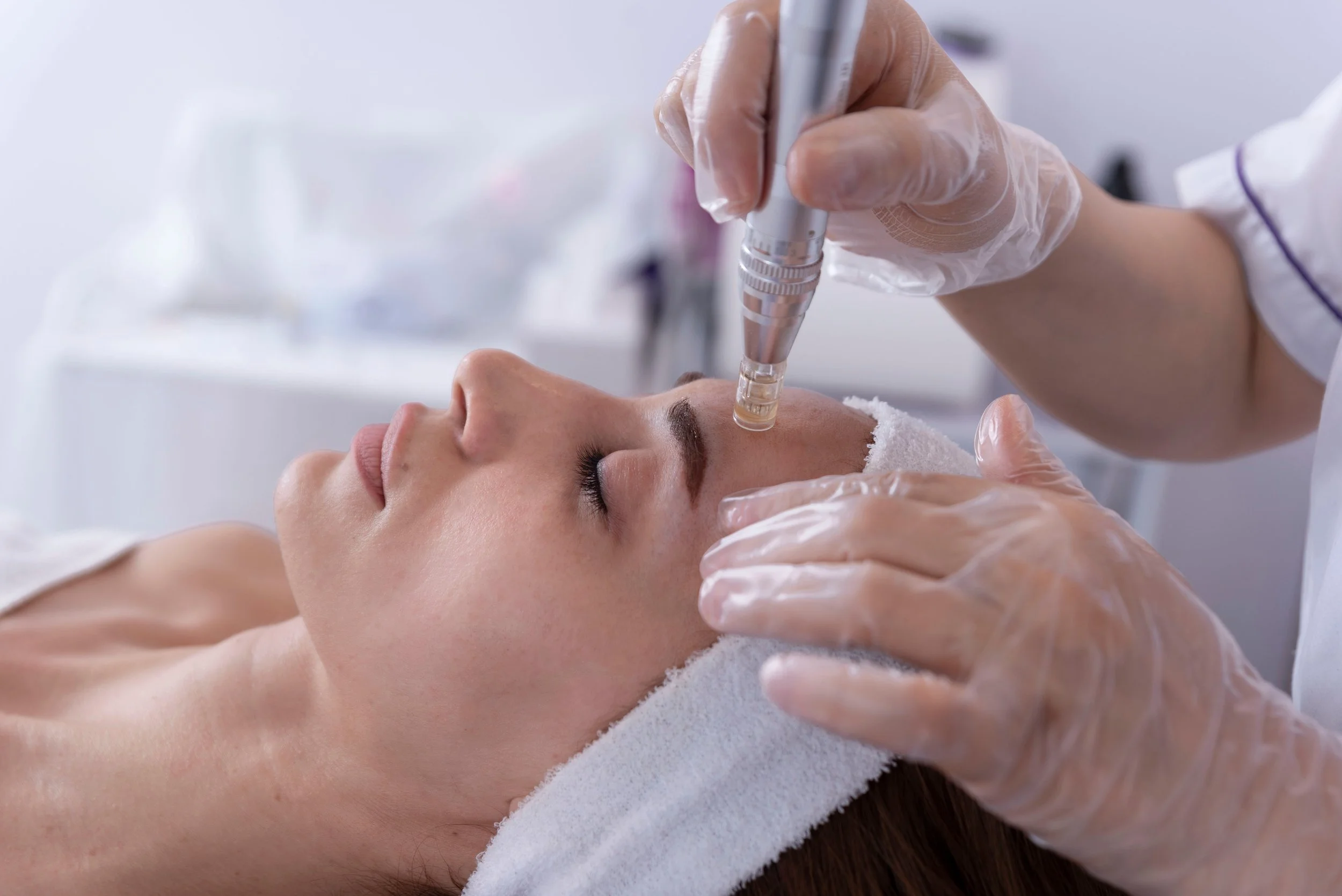
SKIN TREATMENT · SKIN NEEDLING
Skin Needling in Doncaster East
Skin needling, also called collagen induction therapy or microneedling, is a clinical skin treatment that may help improve the appearance of skin texture, acne scarring and post-inflammatory marks. At Fine Skin Clinic, every course is planned and carried out by Registered Nurse Areti Psihogios after a full skin assessment.
- Treatment time
- 30–60 minutes
- Typical course
- 3–6 sessions, 4–6 weeks apart
- Recovery
- Redness and peeling for a few days
- Before you book
- Consultation required

What is skin needling?
Skin needling uses a medical device fitted with very fine needles to create controlled micro-channels across the surface of the skin. These small, controlled injuries prompt the skin's natural wound-healing response, which involves the production of new collagen and elastin over the following weeks.
Treatment depth and technique are adjusted to your skin, the area being treated and your goals. Because changes develop gradually as the skin renews, skin needling is usually recommended as a course rather than a single session.
Concerns skin needling may help with
Skin needling may be discussed as an option for:
Acne scarring, including rolling and boxcar-type scars
Post-inflammatory marks left after breakouts
Uneven skin texture and enlarged-looking pores
Fine lines and changes in skin firmness
Dull or dehydrated-looking skin
What to expect
-
Areti reviews your medical history, current skincare and any medications, assesses your skin, and explains whether skin needling is suitable for you, along with any alternatives.
-
The skin is cleansed and prepared, then treated with the needling device. Appointments take around 30 to 60 minutes.
-
Redness, sensitivity and light peeling are normal in the days following treatment. You'll be given written aftercare instructions to follow at home.
-
A course of 3 to 6 sessions, spaced 4 to 6 weeks apart, is generally recommended. Changes in the skin develop gradually over this time and are reviewed at each appointment. Ongoing maintenance sessions may be advised. Individual results vary.
Aftercare
Avoid touching the treated area for 24 hours
No makeup, retinol, AHAs or BHAs for at least 48 hours
Avoid exercise, swimming, saunas and heat for 48 hours
Use a gentle, fragrance-free moisturiser and apply SPF daily
Avoid sun exposure for at least 2 weeks
Don't pick or peel flaking skin
Risks and suitability
Common: redness, swelling, sensitivity, peeling and irritation.
Less common: infection, post-inflammatory pigmentation, prolonged redness and scarring.
May not be suitable if you have: active acne or skin infection, certain skin conditions, or a history of keloid scarring.
All risks and your suitability are discussed in full at your consultation. If you have concerns after treatment, contact the clinic on 1300 851 708.
Skin needling FAQs
-
A course of 3 to 6 sessions, spaced 4 to 6 weeks apart, is generally recommended. The number that's right for you depends on your skin and your concerns, and is discussed at your consultation.
-
Most people have redness, sensitivity and some light peeling for a few days. You'll need to avoid makeup and active skincare for at least 48 hours, and exercise, heat and swimming for 48 hours.
-
Most people feel a prickling or vibrating sensation during treatment. Comfort is discussed before your appointment.
-
Skin needling may help improve the appearance of some types of acne scarring. How much change is possible depends on the type and depth of scarring, and results vary between individuals. Active acne needs to be settled before needling.
-
Skin needling works by creating micro-channels in the skin, while a chemical peel uses exfoliating agents applied to the surface. Peels are often considered for pigmentation and congestion, and needling for texture and scarring. Some plans combine both over time.
-
All skin needling is planned and performed by Areti Psihogios, Registered Nurse (Division 1), AHPRA NMW0001112403.